Full Review of High-Speed Communication Network Connection Technologies
I. Overview of High-Speed Communication Networks
High-speed communication networks fall into two major categories: optical communication and high-speed copper cable communication.
• Optical Communication: Requires conversion between electrical signals and optical signals. It features high transmission speed, large capacity, long transmission distance and low signal loss, making it ideal for medium and long-distance communication scenarios.
• High-Speed Copper Cable Communication: Transmits electrical signals directly. It boasts low cost and low power consumption, suited for short-range communication. Amid the industry shift from 400G/800G to 1.6T, active copper cables embedded with signal amplification chips are developing rapidly.
II. Optical Communication (Fiber Optic Communication)
This technology uses light waves as carriers and optical fibers as transmission media, with two mainstream implementations as follows:
1. Optical Transceiver Module + Optical Fiber (Most Widely Adopted)
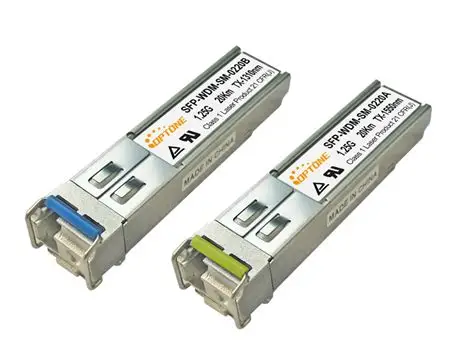
The optical transceiver module and fiber are separate components. The electrical port of the module plugs into network devices, while the optical port connects to fiber cables.
Pros & Cons: Supports long transmission distances yet comes with relatively high power consumption and cost.
(1) Composition of Optical Transceiver Modules
A complete module mainly consists of a Transmitter Optical Subassembly (TOSA), a Receiver Optical Subassembly (ROSA), a Printed Circuit Board Assembly (PCBA) embedded with electrical chips, packaging housing and external interfaces.
Rate Upgrade Roadmap: 100G → 400G → 800G → 1.6T/3.2T. Capacity expansion is realized by either boosting the bit rate per channel or increasing the number of transmission channels.
(2) Classification of Optical Fibers
• Single-Mode Fiber (SMF): Features a tiny core (8–10 μm) that transmits light in a single mode without modal dispersion. Applicable to long-distance, high-bandwidth scenarios such as telecom backbone networks.
• Multi-Mode Fiber (MMF): Has a thicker core (50 μm or 62.5 μm) that supports multiple light propagation modes and suffers from modal dispersion. Suitable for short-range, low-cost deployment such as interconnections inside data centers.
Integrates optical transceiver modules and optical fibers into a single unit for direct device-to-device connection, designed for medium-short interconnections within 100 meters.
Pros & Cons: Reduces damage caused by repeated plugging/unplugging, lightweight and easy to route; however, individual transceiver modules cannot be replaced separately, resulting in poor flexibility, with higher cost and power consumption compared to copper cables.
III. High-Speed Copper Cable Communication
This technology transmits electrical signals directly over copper conductors. To address high-frequency signal attenuation, two technical solutions—passive and active copper cables—have been developed.
1. Classification of Copper Cables
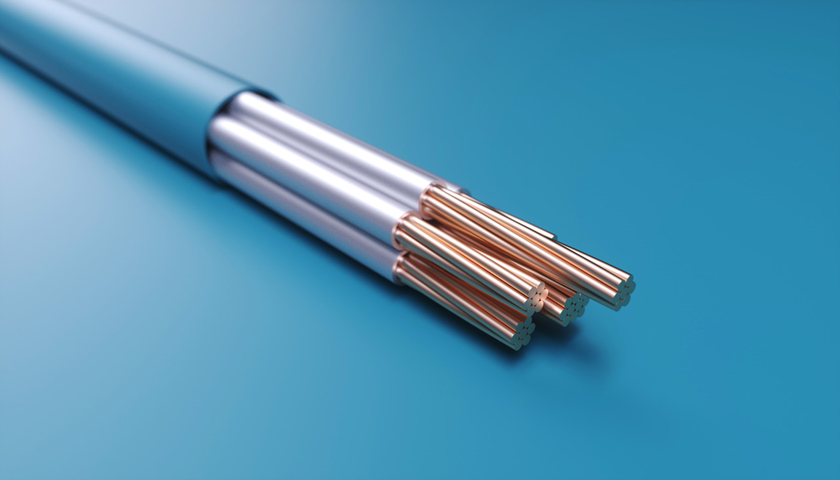
• Direct Attach Copper (DAC / Passive Copper Cable): Constructed from pure twisted twinax copper wires. Extremely low power consumption and cost, yet severe signal attenuation limits its use to ultra-short distances of 2–3 meters.
• Active Copper Cable (ACC): Equipped with redriver chips at the receiving end for signal equalization and reshaping, extending the maximum transmission distance to 5–7 meters.
• Active Electrical Cable (AEC): Fitted with retimer chips at both cable ends to amplify and regenerate signals, improving signal integrity and further extending transmission range.
High-speed copper cables consist of conductors and high-speed connectors (≥10 Gbps per channel), with four primary use cases inside server racks:
• High-Speed Patch Cords: Deliver high-speed signals near CPUs/ASICs to any location within the system.
• Intra-Rack Cables: Used for inter-tray and intra-tray connections, dominated by inter-tray wiring.
• Backplane Interconnect Cables: Link backplanes to circuit boards, power supplies, CPU/GPU modules, supporting high-density, low-latency data transmission.
• Inter-Rack Cables: Deployed for relatively longer distances (ACC cables are commonly used), such as connections between top-of-rack IB switches and compute trays, or interconnections between two separate racks.
IV. Comprehensive Technical Comparison
1. Comparison of Core Advantages
• Cost & Structure: Copper cable end modules contain no expensive components such as lasers and require no extra signal conversion hardware, delivering a substantial cost advantage for short-distance transmission.
• Power Consumption & Heat Dissipation: DAC cables consume less than 0.1W of power, with negligible power draw and far lower thermal dissipation pressure than AOCs.
• Cutting-Edge Future Technology: Co-packaged Optics (CPO) holds promising potential in power efficiency, integration density and transmission range, though the full industrial chain remains immature at present.